How to Choose a Handmade Hunting Knife for the Outdoors
A hunting knife has to survive conditions a kitchen knife never sees — cold hands, field dressing, moisture, and hours away from a sharpening stone. Here's what actually matters when you're choosing one.

Blade Shape: Skinner vs. Utility
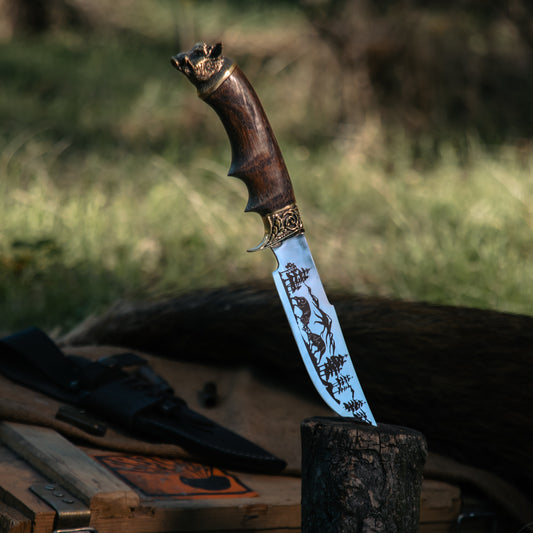
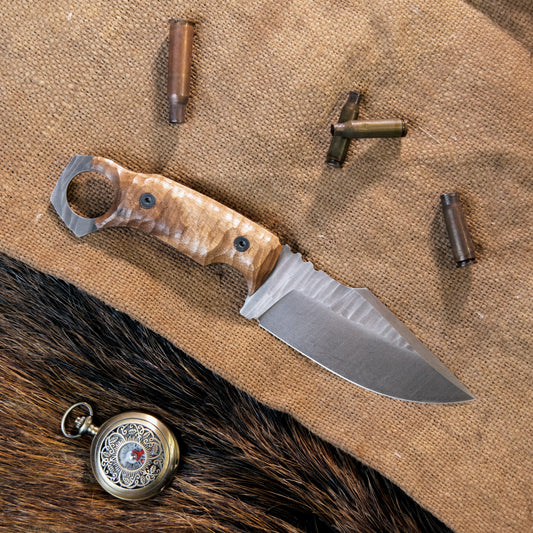
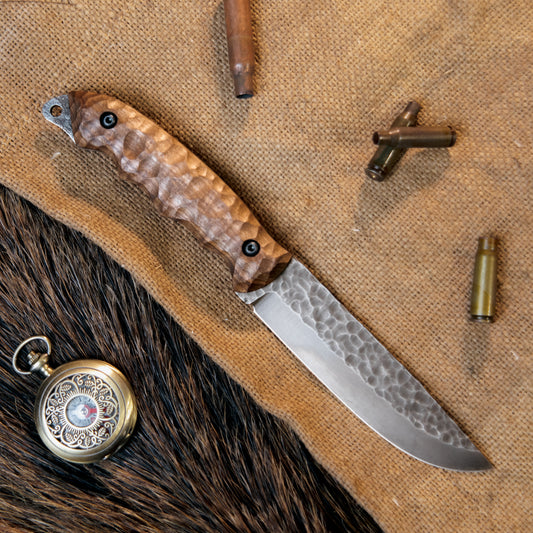
A skinner blade has a pronounced curve built for separating hide from meat in long, controlled strokes without puncturing the carcass. A straighter utility or drop-point blade is more general-purpose — useful for camp tasks, food prep, and rope or cordage work. Monterro's Skinner S and Skinner L cover both ends of that range, from compact field use to a larger everyday-carry blade.
Steel That Holds an Edge in the Field
Away from a sharpening station, edge retention matters more than almost anything else. Monterro's hunting knives use the same hardened Cr12MoV, 50Cr14MoV, and 65G steels as the kitchen line — high-chromium tool steels selected for corrosion resistance and a long working edge, which matters when you're nowhere near a strop for hours at a time.

Grip: Why Texture Beats a Smooth Handle Outdoors
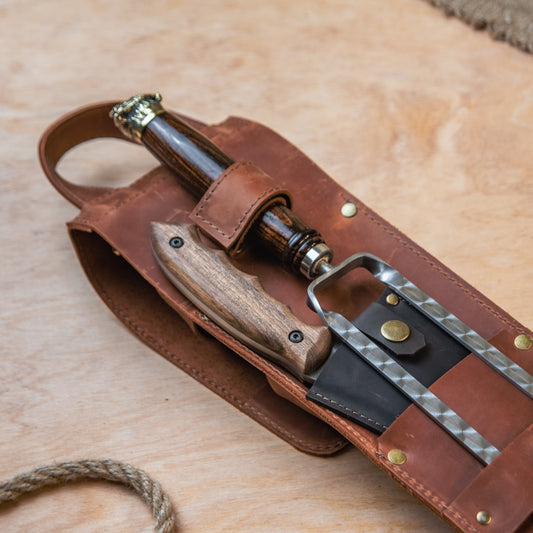
Wet or gloved hands need a handle that won't slip. That's why many Monterro outdoor knives pair a walnut or micarta handle with a stone-textured or hammered finish — it adds grip exactly where a smooth, polished handle would work against you. Some hunting models also add bronze guards for extra hand protection and better balance.
Fixed Blade vs. Folding
For field dressing and heavier outdoor tasks, a fixed blade is stronger and easier to clean than a folder, with no pivot to loosen or jam with debris. A folding or 3-in-1 utility knife trades some strength for pocketability — better suited to camp chores and travel than actual field dressing.
FAQ
What's the difference between a skinner and a regular hunting knife?
A skinner has a more curved edge specifically shaped for hide work; a general hunting or utility knife has a straighter edge better suited to varied camp tasks.
Do I need a guard on a hunting knife?
It's not mandatory, but a bronze or metal guard adds hand protection and balance, especially useful when the blade is wet.
How often does a hunting knife need sharpening?
With a hardened steel like Cr12MoV, expect to hone regularly and do a full sharpening every few trips, depending on use — see our knife care guide for the full routine.
See the full range in our Outdoor & Hunting Knives collection.