Chef Knife vs. Cleaver: Which Handmade Blade Do You Actually Need?
If you're deciding between a handmade chef knife and a cleaver, the honest answer is: they're not competing for the same job. One is built for control and precision, the other for weight and force. Here's how to tell which one actually belongs in your kitchen — or whether you need both.

What a Chef Knife Is Built For
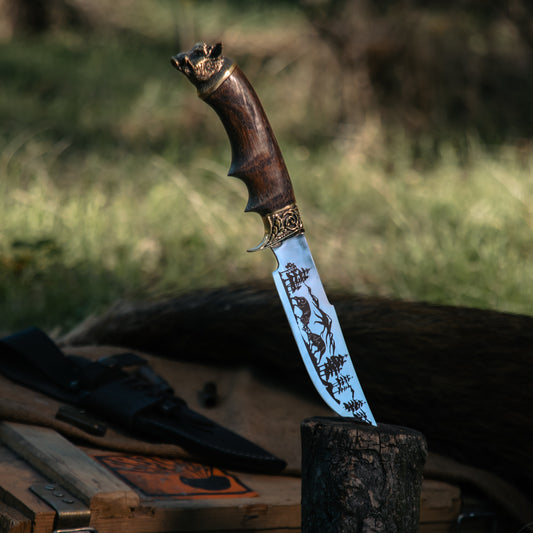
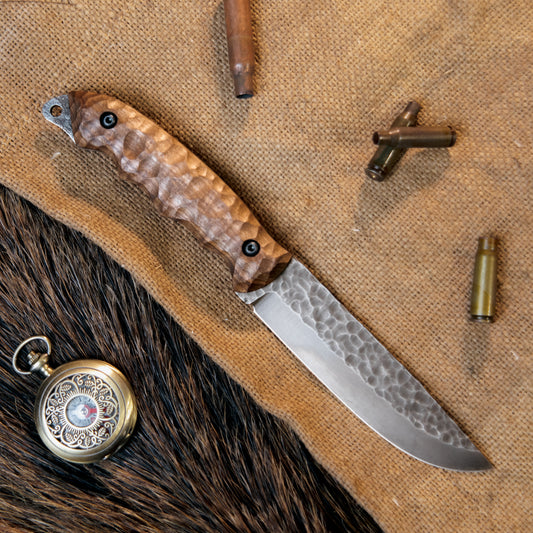
A chef knife is the all-purpose workhorse of the kitchen. The tapered, curved blade is designed for a rocking motion — mincing garlic, slicing vegetables, breaking down herbs, portioning proteins. Monterro's handmade chef knives, like the Sakura chef knife, use a hardened steel edge that's thin enough for fine, controlled cuts but still holds up to daily prep work.
If most of your cooking involves chopping, slicing, and dicing a wide range of ingredients, a chef knife covers 90% of what you'll ever need at the cutting board.
What a Cleaver Is Built For
A cleaver trades precision for weight and edge geometry built to push through resistance — think bone-in cuts, dense vegetables like squash, or breaking down a whole bird. The wide, heavy blade lets gravity and momentum do the work instead of your wrist.

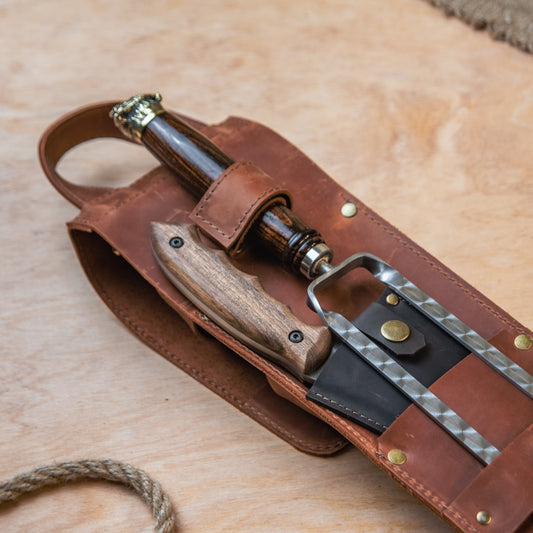
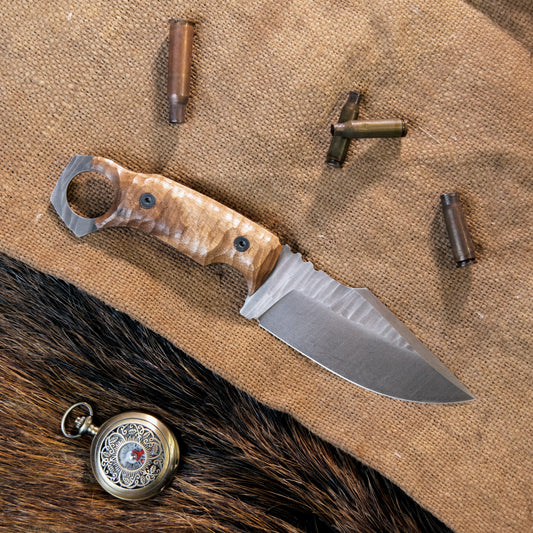
Monterro's Serbian handmade cleaver is a good example: full-tang construction, a walnut handle for a stable grip, and a stone-textured finish that adds bite when you're working through tougher cuts. It's not a knife you reach for to julienne carrots — it's the one you reach for when a chef knife would struggle.
Steel and Handle: What Actually Matters in a Handmade Blade
Regardless of which shape you choose, two things determine how a handmade knife performs over years of use, not just out of the box:
- Steel grade. Monterro knives are made from Cr12MoV, 50Cr14MoV, or 65G steel, all hardened for edge retention. Cr12MoV and 50Cr14MoV are high-chromium tool steels chosen for corrosion resistance and long edge life — ideal for kitchen use where the blade meets acid, salt, and moisture daily.
- Handle material and balance. Walnut, wenge, and ironwood handles aren't just cosmetic — they affect where the knife's weight sits in your hand. A cleaver needs a handle that won't slip when you're applying force; a chef knife needs one that lets you pinch-grip the blade comfortably for control.
Want the full breakdown of steel grades and wood types? Read our materials guide.
Which One Should You Buy First?
If you only own one good knife, make it a chef knife — it's the more versatile tool for everyday cooking. Add a cleaver once you're regularly working with bone-in meat, thick-skinned produce, or you just want a knife that does the heavy lifting so your chef knife's edge lasts longer between sharpenings. Many Monterro customers end up owning both, plus a smaller utility knife for detail work; you can see the full range in our Handmade Chef Knives and Kitchen Knives collections.
FAQ
Can a cleaver replace a chef knife?
Not really. A cleaver is too heavy and blunt-angled for fine slicing or mincing. It complements a chef knife rather than replacing it.
Is a heavier blade always better for a cleaver?
Not necessarily — weight should match the task and your wrist strength. A cleaver that's too heavy becomes tiring and less controlled over a full prep session.
How do I keep either blade sharp?
Both benefit from regular honing and occasional sharpening. See our full knife care guide for a step-by-step routine.
Ready to choose? Browse the full Monterro knife collection and find the blade built for how you actually cook.